Job Interview Hairstyles: What to Wear and What to Avoid
The best professional hairstyles for job interviews, and styles to avoid.
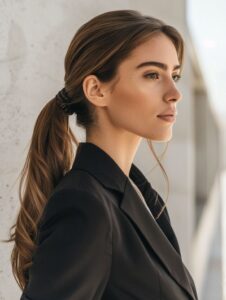
First impressions happen fast, and like it or not, your hair is part of that snapshot before you’ve even said a word. That doesn’t mean you need a dramatically different look for interview day — it means choosing a style that feels polished, doesn’t require mid-interview adjusting, and lets the focus stay on what you’re actually saying.
This guide covers the best professional hairstyles for interview settings, along with a few styles worth avoiding, so your job interview hair works for you instead of becoming a distraction.
What Makes a Hairstyle “Interview-Ready”
- It stays put. The best interview hairstyles don’t require touch-ups or fidgeting, which can read as nervousness even when you’re perfectly calm.
- It doesn’t obstruct your face. Interviewers want to see your expressions and make eye contact — styles that constantly fall forward work against you.
- It matches the environment. A creative agency and a law firm may have different expectations, so it’s worth considering your industry’s general norms.
- It feels like you. An interview isn’t the time to debut a completely new look you’re not comfortable wearing — confidence matters as much as polish.
Best Professional Hairstyles for Interviews
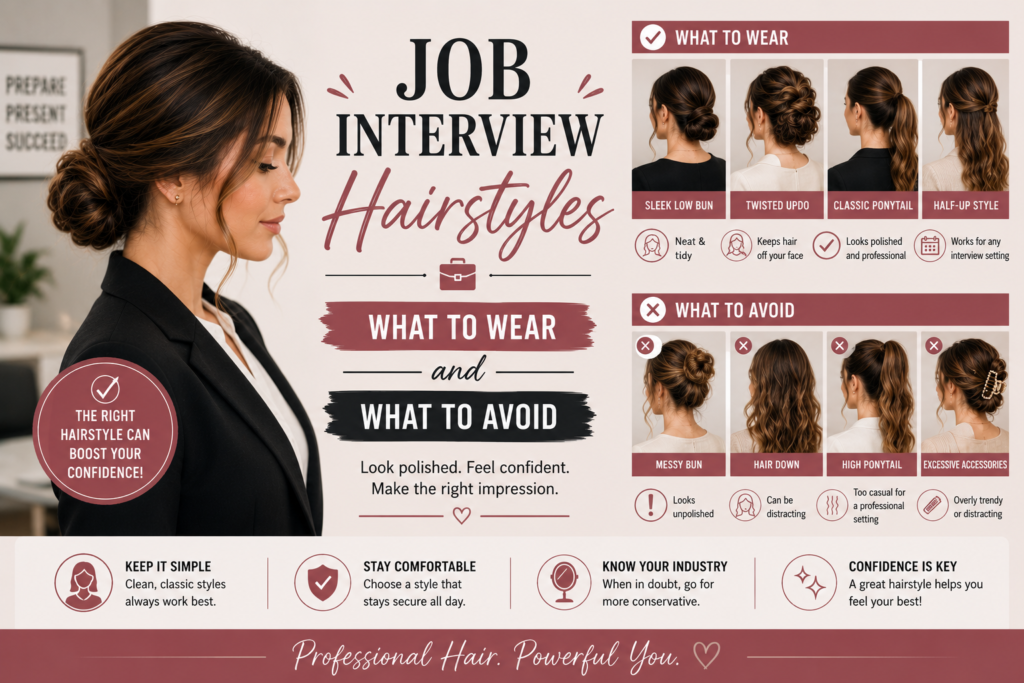
1. Sleek Low Bun
A smooth, low bun is one of the most universally appropriate options — polished, out of your face, and appropriate across nearly any industry.
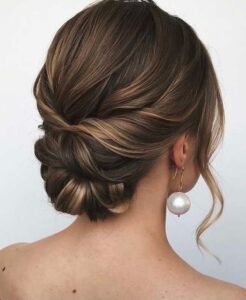
2. Low Ponytail
A simple, smoothed-back low ponytail is fast to create and reads as clean and put-together without looking overly formal.
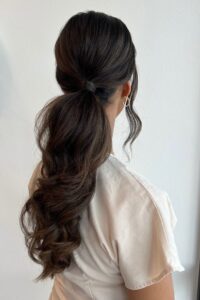
3. Half-Up Style
Pulling just the top section back keeps hair out of your face while still looking natural and approachable — a good middle ground for interviews at more casual companies.
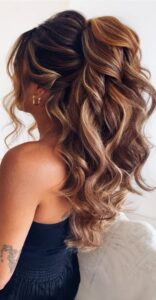
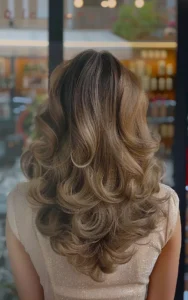
4. Blowout with Hair Down
For those with shorter or shoulder-length hair, a smooth, well-styled blowout worn down works well, provided it’s neat and frizz-free.
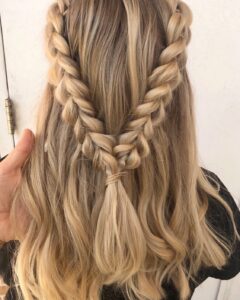
5. Simple Braid
A single, low three-strand braid keeps hair controlled and professional without looking overly severe.
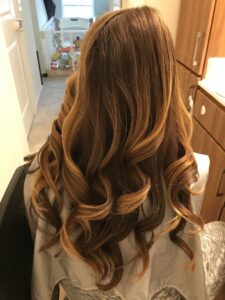
6. Loose, Smoothed Waves
For a slightly softer take on “hair down,” smooth, low-key waves (rather than tight curls) tend to read as polished rather than casual.
7. Slicked-Back Bun
A sleek, gelled-back bun with a clean part offers a modern, minimalist option that works especially well in creative or corporate settings alike.
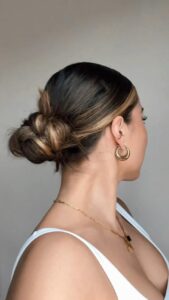
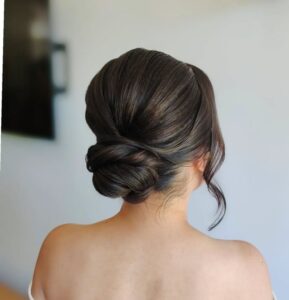
8. Low Chignon
A twisted, slightly textured version of the classic bun, the chignon offers a touch more personality while remaining fully professional.
Hairstyles to Avoid for Interviews
While personal style matters, a few choices are worth reconsidering specifically for interview settings:
- Hair that requires constant adjusting. If a style tends to fall into your face or slip out of place, it can become a distraction during a conversation where focus matters most.
- Very high-volume, dramatic styles. Save intentionally voluminous or elaborate updos for social occasions — interviews generally call for a more understated approach.
- Freshly done, unfamiliar styles. Trying a brand-new cut or color the day before an interview can add unnecessary stress if it doesn’t turn out the way you hoped.
- Excessive product or overly stiff styling. Hair that looks heavily sprayed or unnaturally rigid can come across as overdone rather than polished.
- Styles that obscure your face. Long, heavy bangs or hair consistently falling forward can make it harder for an interviewer to read your expressions and connect with you.
Tips for Interview-Day Hair
- Do a trial run beforehand. Test your chosen style a day or two before the interview to make sure it holds up and that you feel confident wearing it.
- Keep a small touch-up kit with you. A travel-size hairspray and a couple of bobby pins can save your style if you need a quick fix before walking in.
- Consider the weather and commute. If you’re walking, taking public transit, or dealing with humidity, choose a style that can withstand the elements rather than one that wilts easily.
- When in doubt, keep it simple. A clean, low-maintenance style will almost always serve you better than something elaborate that requires perfect execution.
Industry Considerations
While there’s no universal rulebook, a few general patterns are worth knowing:
- Corporate, legal, and finance settings tend to favor more classic, understated styles — sleek buns, ponytails, or simple, neat waves.
- Creative industries (design, media, marketing) often allow for more personal expression, including bolder colors or more textured, natural styles.
- Healthcare and hospitality roles may have practical considerations, like hair needing to be pulled back for hygiene or safety reasons.
If you’re unsure what’s appropriate for a specific company, a quick look at their team page or social media can offer useful context.
Final Thoughts
Your hairstyle shouldn’t be the thing you’re thinking about mid-interview — it should be one less thing to worry about so you can focus entirely on the conversation. Choose a professional hairstyle for interview settings that feels authentic to you, holds up for the full appointment, and fits the general tone of the company you’re meeting with. A little preparation goes a long way toward walking in feeling confident and put-together.
Looking for more polished, everyday styling ideas? Check out our guides on Low Bun Hairstyles and 10 Quick Hairstyles for Busy Mornings for more reliable looks.