Pixie Cut Styling Guide: Ideas for Every Face Shape
A pixie cut styling guide with ideas matched to different face shapes.

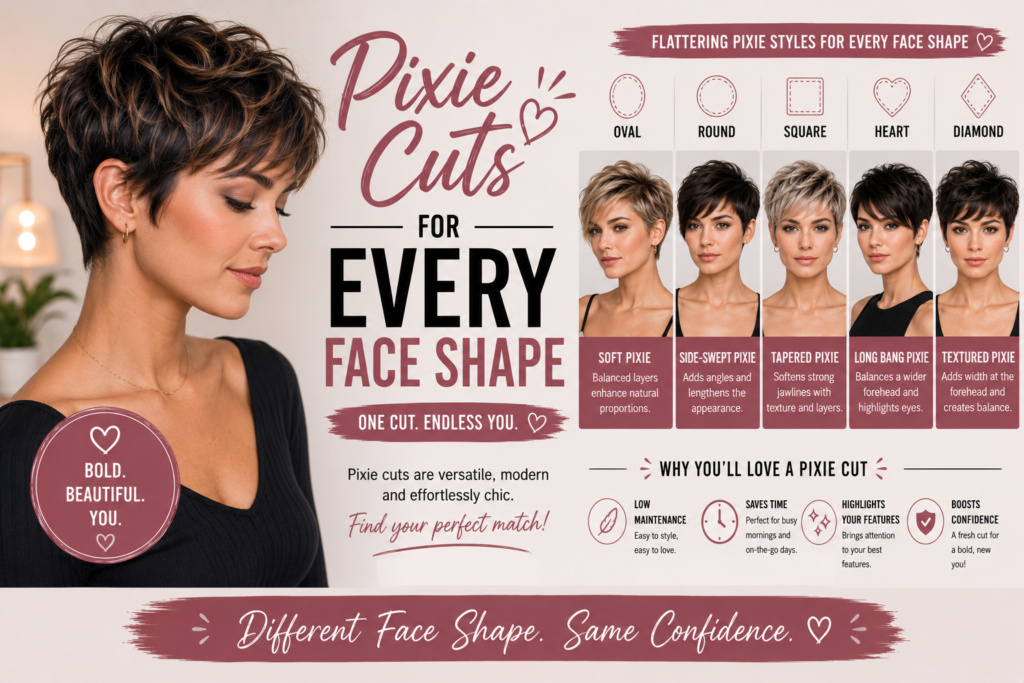
Few haircuts require as much confidence — or reward it as generously — as the pixie cut. With no length to hide behind, a pixie puts your features front and center, which is exactly why getting the right variation for your face shape matters so much. The good news: there’s a pixie cut style flattering to virtually every face shape, provided you know which details to ask for.
This guide breaks down the best pixie cut ideas by face shape, plus general styling tips to help you get the most out of this bold, low-maintenance cut.
Why Face Shape Matters for Pixie Cuts
Since a pixie cut removes most of the length that would otherwise soften or balance facial features, the cut itself — where volume sits, how the fringe falls, how short the sides are — does a lot of the work that longer hairstyles handle more passively. Choosing a version tailored to your face shape helps ensure the cut enhances your features rather than working against them.
Pixie Cuts by Face Shape
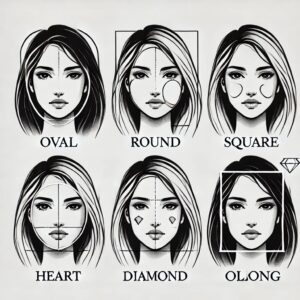
For Round Faces
Best options: Longer, side-swept pixies with height at the crown.
Round faces benefit from styles that add vertical length and avoid excess volume at the sides, which can widen the face further. A pixie with more length on top, styled with lift at the crown, and a side-swept fringe helps elongate the overall shape.
- Try: A textured pixie with a longer, side-swept top section and shorter, closely cropped sides.
- Avoid: Rounded, uniform volume all around the head, which can emphasize width.
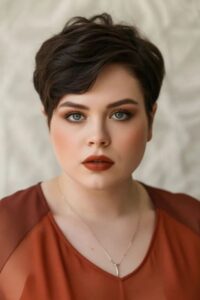
For Oval Faces
Best options: Almost any pixie variation works well.
Oval faces are considered one of the most versatile shapes for pixie cuts, since the balanced proportions accommodate a wide range of styles without needing much strategic adjustment.
- Try: A classic textured pixie, a longer pixie-bob, or even a more dramatic, closely cropped style — most versions will suit an oval face shape.
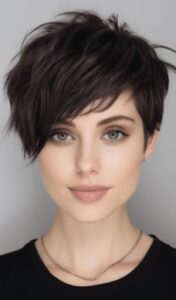
For Square Faces
Best options: Soft, textured pixies with movement around the jaw.
Square faces often have a stronger jawline, so pixie cuts with soft layers and texture around the face help balance sharper angles rather than emphasizing them.
- Try: A textured pixie with soft, wispy pieces framing the jaw and a slightly longer fringe to soften the forehead.
- Avoid: Very blunt, geometric cuts, which can emphasize angularity.
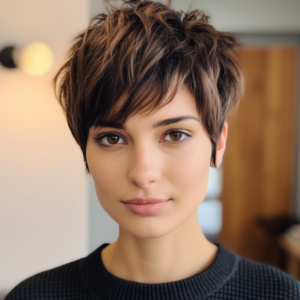
For Heart-Shaped Faces
Best options: Pixies with volume at the chin area and a softer fringe.
Heart-shaped faces (wider at the forehead, narrower at the chin) benefit from pixie styles that add width or softness near the jawline to balance the proportions.
- Try: A pixie with slightly longer pieces near the jaw and a side-swept or curtain-style fringe to soften a wider forehead.
- Avoid: Styles with heavy volume concentrated only at the crown, which can emphasize forehead width.
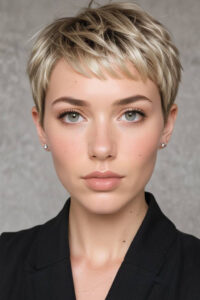
For Long or Rectangular Faces
Best options: Pixies with width and volume at the sides, plus a fuller fringe.
Longer face shapes benefit from styles that add horizontal volume and avoid excessive height at the crown, which can elongate the face further.
- Try: A pixie with fuller sides, a blunt or full fringe, and minimal height on top.
- Avoid: Very short, closely cropped styles with significant height, which can exaggerate length.
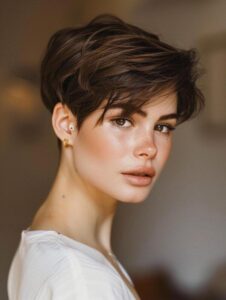
For Diamond Faces
Best options: Pixies with softness at the temples and a side-swept fringe.
Diamond face shapes (narrower forehead and chin, wider cheekbones) benefit from styles that soften the cheekbone area while adding a bit of width near the forehead and jaw.
- Try: A textured pixie with a side-swept fringe and soft, layered pieces near the temples.
- Avoid: Styles that add significant volume at the cheekbone level, which can emphasize width in that area.
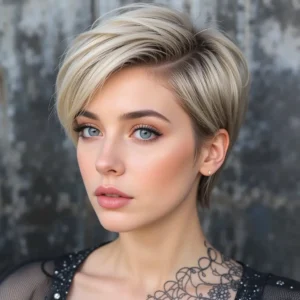
General Pixie Cut Styling Tips
- Use a lightweight styling paste or wax. A small amount worked through dry or damp hair adds texture and definition without weighing down short layers.
- Blow-dry with your fingers for volume. Lifting hair at the roots while blow-drying, even briefly, adds noticeable volume to a pixie cut.
- Get regular trims. Pixie cuts grow out more noticeably than longer styles, so trims every four to six weeks help maintain the intended shape.
- Experiment with your fringe. Side-swept, blunt, or slightly grown-out — how you style the front section can dramatically change the overall look of a pixie without needing an actual haircut.
- Consider your hair texture. Curly and wavy pixies often need slightly different product and drying techniques (like a diffuser) than straight pixies to maintain shape and definition.
Common Pixie Cut Mistakes to Avoid
- Skipping a consultation about face shape. A stylist experienced with pixie cuts can adjust length, layering, and fringe placement specifically for your features.
- Using heavy products. Thick creams or oils can flatten a pixie’s volume almost immediately — stick to lightweight pastes, waxes, or texturizing sprays.
- Letting it grow out too long between trims. Pixies rely on precise shape, and growth can quickly blur the lines that make the cut work.
- Not accounting for cowlicks or natural texture. Be upfront with your stylist about any strong cowlicks or texture patterns, which can affect how certain pixie styles fall.
Final Thoughts
A great pixie cut isn’t one-size-fits-all — the details that make it work are specific to your individual face shape and features. Whether you have a round, oval, square, heart, long, or diamond face shape, there’s a version of this bold, low-maintenance cut designed to flatter you specifically. Bring reference photos to your consultation and talk openly with your stylist about your face shape and styling preferences to land on the right fit.
Looking for more haircut inspiration? Check out our guides on 15 Easy Ways to Style Short Hair and 20 Bob Styles You Need to See for more ideas.