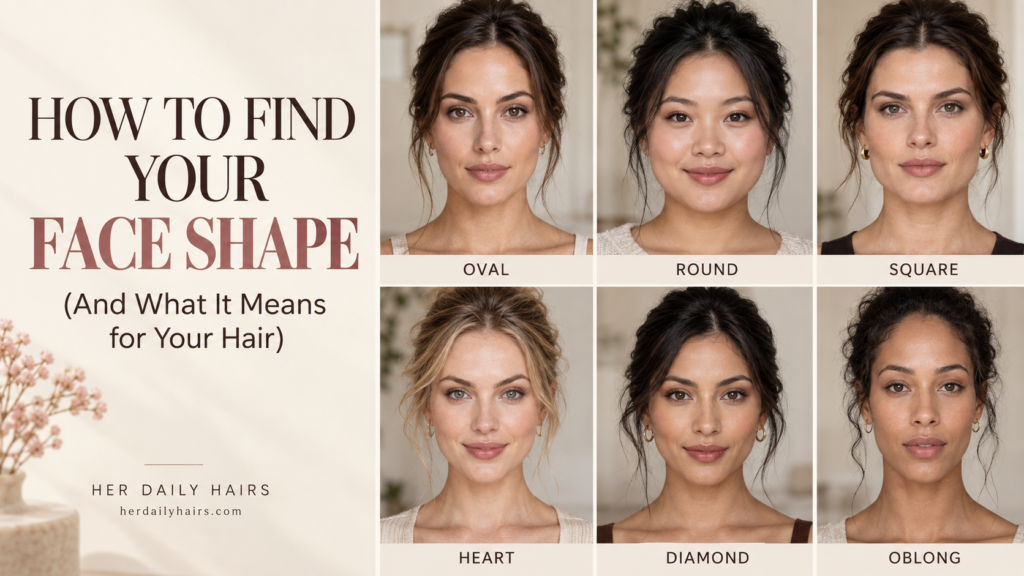
Before you can find the most flattering haircut, you need to know what you’re actually working with. Learning how to find your face shape is the first step toward choosing hairstyles that genuinely suit your features, rather than guessing based on whatever cut happens to be trending. This simple face shape hairstyle guide walks through exactly how to identify your shape at home, plus what it means for the styles most likely to flatter you.
The good news is that figuring out your face shape doesn’t require any special tools or a trip to the salon — just a mirror, a bit of measuring (or eyeballing), and a few minutes.
Why Face Shape Matters for Hairstyling
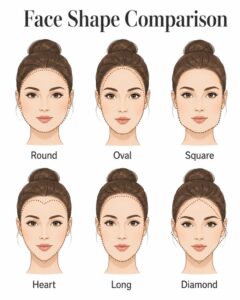
Different face shapes have different proportions — some are wider at the forehead, others at the jaw, and some are evenly balanced throughout. Hairstyles work by either enhancing your natural proportions or creating the illusion of balance where there’s a noticeable difference between features. Knowing your face shape gives you a practical starting point for choosing cuts, bangs, and even color placement that are more likely to feel flattering, rather than working through trial and error at every salon visit.
How to Find Your Face Shape in 3 Easy Steps
Step 1: Pull Your Hair Back and Look Straight On
Stand in front of a mirror (or take a photo) with your hair pulled completely back, so your hairline, forehead, and jawline are all clearly visible. Try to keep a neutral expression, since smiling can shift the appearance of your cheeks and jaw slightly.

Step 2: Compare the Width of Your Forehead, Cheekbones, and Jaw
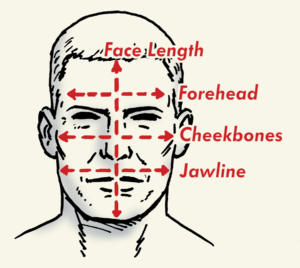
Look at three key measurements:
- Forehead width — the widest point across your forehead
- Cheekbone width — the widest point across your cheekbones
- Jawline width — the widest point across your jaw, just below your ears
If you want a more precise measurement, you can use a soft tape measure or a piece of string held up to a ruler for each of these three points, plus the overall length of your face from hairline to chin.
Step 3: Match Your Proportions to a Face Shape
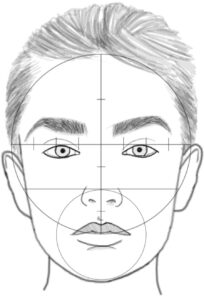
Once you have a general sense of these three widths (and how they compare to your face’s overall length), you can match your proportions to one of the general face shape categories below.
The Main Face Shapes Explained
Round
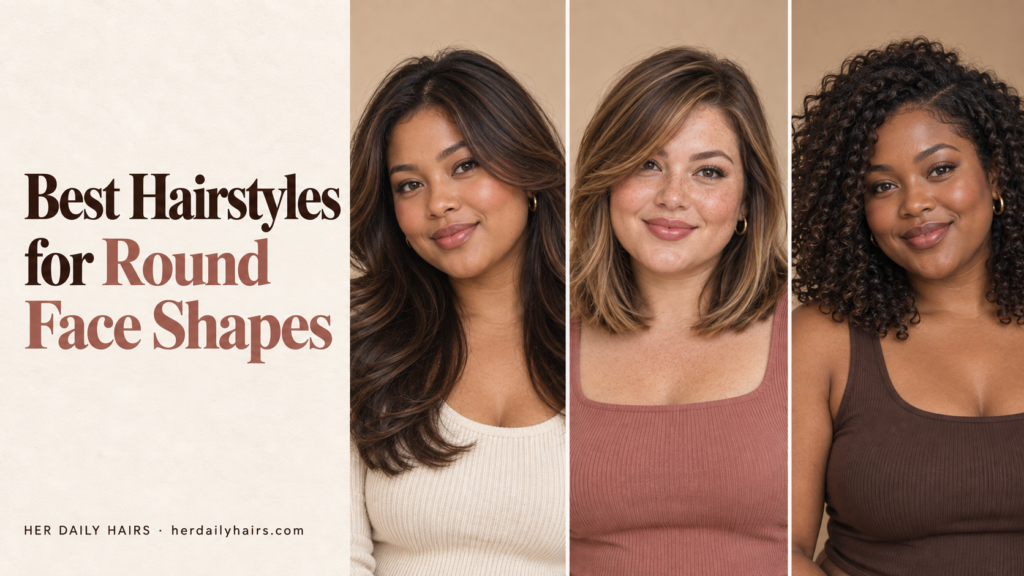
Round faces have roughly equal width and length, with the cheeks as the widest point and a softly curved jawline and chin. If this sounds like you, check out our full guide to hairstyles for round faces for cuts that add height and definition.
Oval
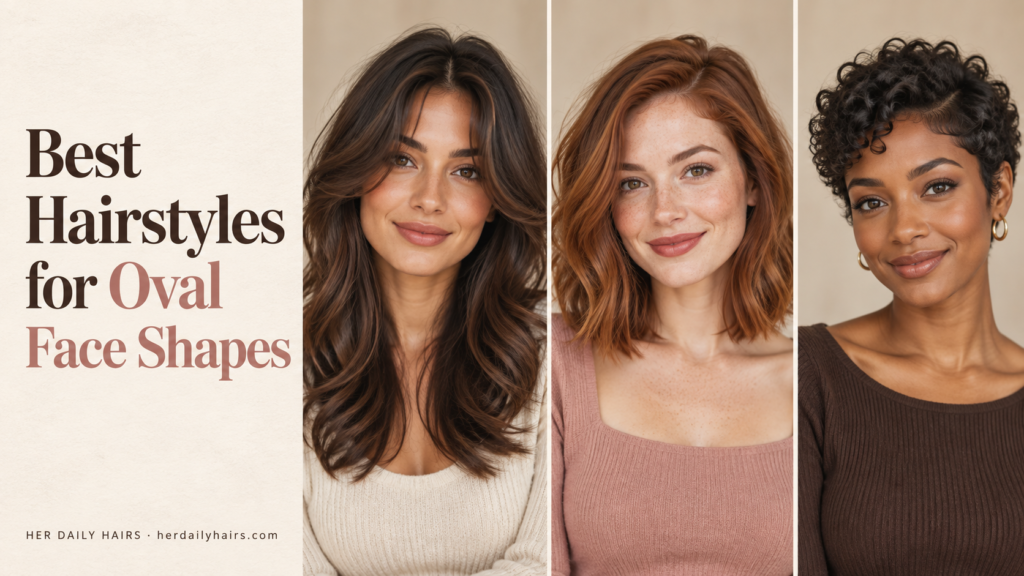
Oval faces are longer than they are wide, with a gentle taper from a slightly wider forehead down to a narrower, softly rounded chin. This shape is considered the most versatile for styling — see our guide to hairstyles for oval faces for the full range of options.
Square
Square faces have a forehead, cheekbones, and jawline that are all roughly the same width, with a strong, angular jawline and minimal taper from top to bottom. Our guide to hairstyles for square faces covers cuts that soften or embrace this structure.
Heart
Heart-shaped faces have a wider forehead that gradually narrows down to a smaller, often pointed chin. If your forehead is clearly your widest feature, our guide to hairstyles for heart-shaped faces breaks down the best ways to balance this proportion.
Quick Reference: Face Shape Comparison
| Face Shape | Forehead | Cheekbones | Jaw | Overall Outline |
|---|---|---|---|---|
| Round | Moderate | Widest point | Soft, rounded | Equal width and length |
| Oval | Slightly wider | Widest point | Narrower, rounded | Longer than wide, balanced |
| Square | Wide | Similar to forehead/jaw | Strong, angular | Equal width throughout |
| Heart | Widest point | Moderate | Narrow, often pointed | Tapers from wide to narrow |
Tools That Can Help You Measure More Precisely
While the mirror-and-eyeball method works well for most people, a few simple tools can help if you want more precise measurements:
- A flexible tape measure wrapped around the widest points of your forehead, cheekbones, and jaw gives you exact numbers to compare against each other.
- A piece of string and a ruler work just as well if you don’t have a tape measure handy — simply hold the string against each width, then measure the string.
- A front-facing photo taken straight-on, with hair pulled back and a neutral expression, can be especially helpful for comparing proportions after the fact, since it’s easy to second-guess yourself in a mirror.
- A face shape overlay app or filter, if you prefer a more guided approach, though these are generally no more accurate than manually comparing your measurements.
Beyond the Haircut: Other Ways Face Shape Can Guide Your Styling
While this guide (and its companion pieces) focus primarily on haircuts, face shape can also inform a few other styling decisions:
- Glasses frame shape is often chosen using similar face-shape principles, typically recommending frames that contrast with your face’s natural outline.
- Makeup contouring follows many of the same width-balancing ideas discussed throughout this guide, using color and shading rather than hair volume and layering.
- Hair color placement, such as face-framing highlights or a money piece, can reinforce the same balancing goals as a haircut, without necessarily requiring you to change your cut at all.
- Accessory choices, like where you place a headband or how you style a hat, can also be informed by an understanding of which areas of your face you want to emphasize or soften.
What If You’re Between Two Face Shapes?
It’s common to feel like your face doesn’t perfectly match a single category, and that’s completely normal — face shapes exist on a spectrum rather than as strict, distinct categories. If you’re between two shapes, it can help to:
- Identify which shape you’re closer to and start with styling advice from that category as your primary guide.
- Borrow from both guides. If you’re between oval and round, for example, you might find that both height-adding techniques and versatile, low-maintenance styles work well for you.
- Prioritize personal preference. Face shape guidelines are helpful starting points, not strict rules — if a style you love doesn’t perfectly match your shape’s “recommended” list, that doesn’t mean it won’t look great on you.
Does Face Shape Really Matter That Much?
Face shape guidelines are a useful tool, but they’re not the only factor worth considering. Hair texture, density, personal style, and lifestyle all play a significant role in what actually works well for you day to day. Think of face shape as one input among several, rather than a strict rulebook — the goal is to use it as a helpful starting point for narrowing down options, not as a limitation on what you’re allowed to try.
Frequently Asked Questions About Finding Your Face Shape
Can my face shape change over time? Facial proportions can shift somewhat due to weight changes, aging, or other factors, so it’s worth reassessing your face shape every so often rather than assuming it will stay exactly the same throughout your life.
Is there an easy way to check my face shape without measuring? Yes — simply pulling your hair back and observing the general outline of your face in a mirror or photo, without precise measurements, is often enough to get a good general sense of your shape.
What if I have a diamond or oblong face shape? While this guide focuses on the four most commonly referenced shapes, diamond and oblong faces share some characteristics with the categories here — diamond faces often share styling principles with heart-shaped faces (balancing a narrower forehead and chin around wider cheekbones), while oblong faces tend to benefit from many of the same techniques recommended for longer oval faces.
Does my face shape determine what I have to wear? Not at all — face shape guidelines are meant to offer a helpful starting point, not a strict requirement. Plenty of people successfully wear styles outside their “recommended” list simply because they love how it looks and feels.
How accurate are online face shape quizzes and apps? These tools can offer a helpful starting point, but manually comparing your forehead, cheekbone, and jaw width in a mirror or photo tends to be just as reliable, if not more so, since it removes any guesswork introduced by photo angles or lighting in an app-based analysis.
Should I ask my stylist to confirm my face shape before a haircut? It’s not a bad idea, especially if you’re planning a significant change. Stylists assess face shape regularly and can often confirm or refine your own self-assessment in just a few seconds during a consultation, helping ensure the cut you’re picturing will actually translate well to your specific proportions.
Final Thoughts
Finding your face shape is a simple, practical first step toward choosing hairstyles that are more likely to feel flattering and suited to your features. Once you’ve identified your general shape, our full styling guides for round, oval, square, and heart-shaped faces are ready to help you find the specific cuts, bangs, and styling techniques best suited to you.
Loved this guide? Save it to Pinterest so you can quickly reference your face shape next time you’re planning a new hairstyle.