If you’re growing out your natural hair, retaining length, or just looking for a break from daily styling, protective hairstyles for natural hair are one of the most effective tools available. These styles work by tucking away your ends — the oldest, most fragile part of your hair — and minimizing the daily manipulation, heat, and friction that lead to breakage over time.
The key to getting real results from protective styling is choosing genuinely low manipulation hairstyles, meaning styles that require minimal daily combing, restyling, or tension once they’re installed. Done well, a good protective style can stay in for anywhere from a few days to several weeks, giving your hair a real chance to grow and thrive with far less day-to-day stress.
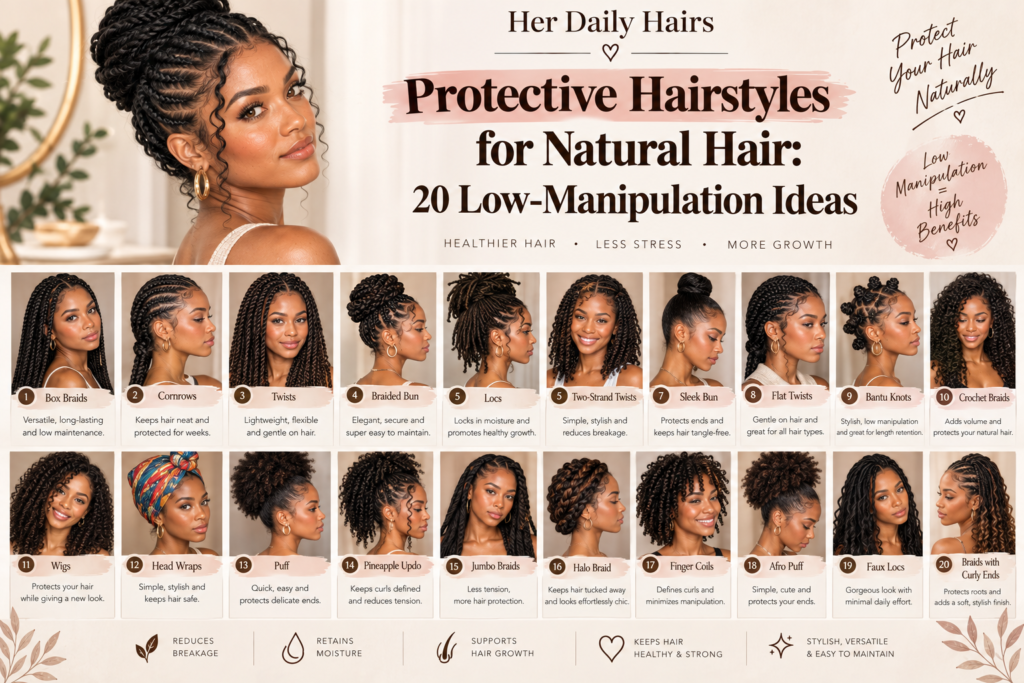
Below, we’re rounding up 20 protective hairstyles ranging from quick, everyday options to longer-term installs, along with tips on how to choose the right one for your hair goals and how to keep your natural hair healthy underneath.
What Makes a Hairstyle “Protective”?
Not every updo or braid technically counts as a protective style. True protective hairstyles generally share a few key qualities:
- Ends are tucked away, rather than left hanging loose and exposed to friction from clothing, pillowcases, or the elements.
- Minimal daily manipulation is required. You’re not combing, brushing, or restyling the hair underneath every day.
- Low tension at the hairline and edges. Styles that pull excessively tight at the root, even if they technically tuck the ends away, can cause more harm than good over time.
- The style can be maintained for an extended period, whether that’s a few days or several weeks, without requiring the hair underneath to be disturbed.
Benefits of Protective Styling
- Length retention. By minimizing daily manipulation and friction, protective styles help prevent the breakage that often outpaces growth for many natural hair types.
- Moisture retention. Tucked-away ends are less exposed to dry air and friction, which helps hair hold onto moisture longer between wash days.
- Time savings. Once installed, most protective styles require far less daily styling time than wearing your natural texture out every day.
- Versatility. Many protective styles, from braids to twists, offer a wide range of looks, meaning you don’t have to sacrifice style for hair health.
20 Protective Hairstyles for Natural Hair
1. Box Braids
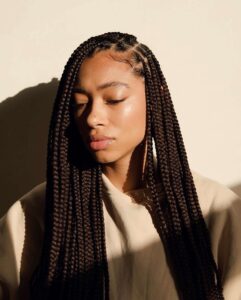
One of the most classic protective styles, box braids involve sectioning hair into square-shaped parts and braiding extensions into each section. They can last anywhere from four to eight weeks with proper care and come in nearly unlimited size and length variations.
2. Knotless Braids
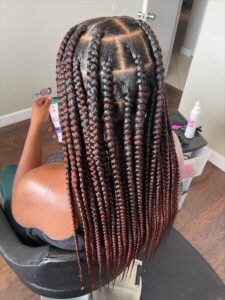
A gentler evolution of traditional box braids, knotless braids start with your natural hair and gradually feed in extensions, avoiding the tight knot at the root that can pull on the hairline. This makes them a popular choice for anyone prone to tension headaches or hairline sensitivity.
3. Senegalese Twists
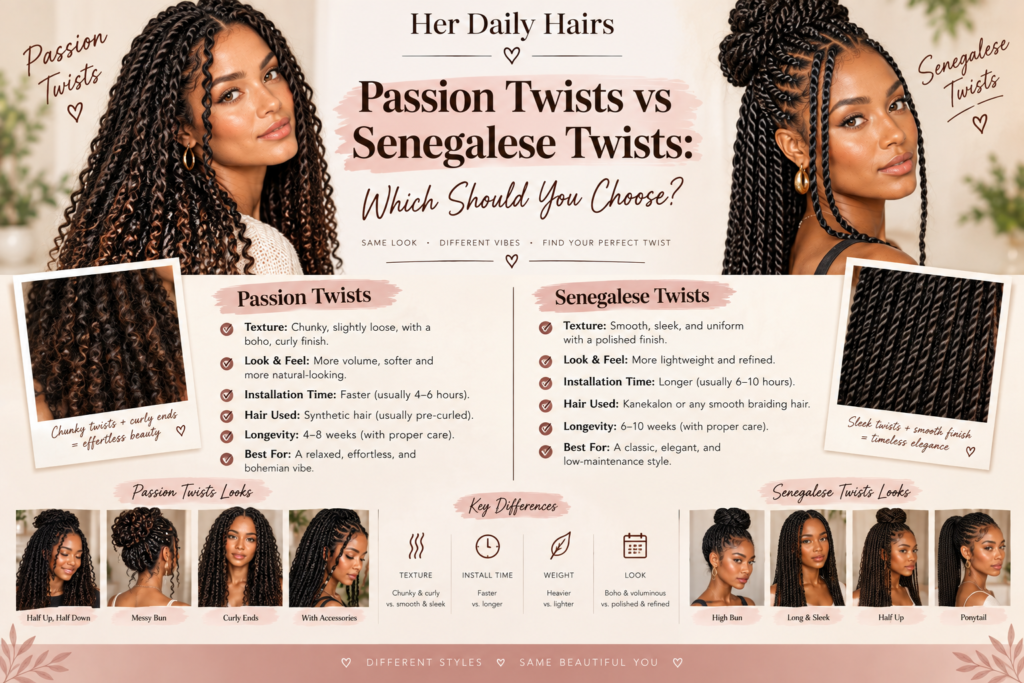
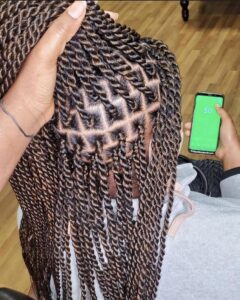
Made using a two-strand twisting technique with added extensions, Senegalese twists have a smooth, rope-like texture and tend to be lighter than braided styles, making them a comfortable long-term option.
4. Marley Twists
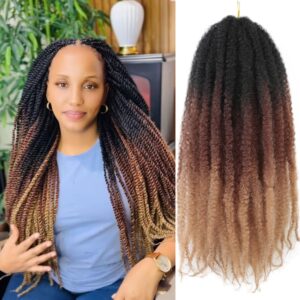
Using a coarser, textured extension hair that mimics natural afro-textured hair, Marley twists offer a fuller, more voluminous look than sleeker twist styles, making them a favorite for those wanting extra volume.
5. Havana Twists
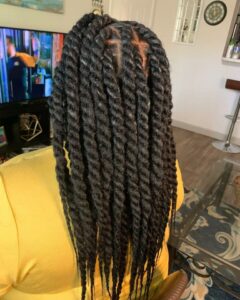
Similar to Marley twists but typically using a different type of extension hair, Havana twists tend to be thicker and hold their shape well, offering a bold, statement-making protective option.
6. Passion Twists
A trendier take on twisted protective styles, passion twists use a wavy, textured extension hair for a softer, more bohemian finish compared to traditional twist styles.
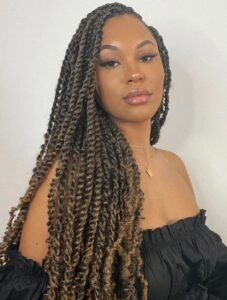
7. Faux Locs
Designed to mimic the look of natural, matured locs without the long-term commitment, faux locs are typically wrapped or crocheted using extension hair over small sections of natural hair, offering a temporary loc look that can be removed later.
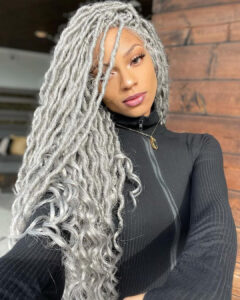
8. Crochet Braids
Rather than braiding extensions directly into the hair strand by strand, crochet braids involve first braiding the natural hair into cornrows, then using a crochet hook to attach pre-looped extension hair. This technique tends to be faster to install than traditional braiding methods.
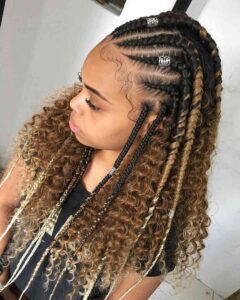
9. Cornrows
A foundational protective style on its own or as a base for other techniques (like crochet braids or wig installs), cornrows involve braiding the natural hair flat against the scalp in rows, requiring no added extensions if kept simple.
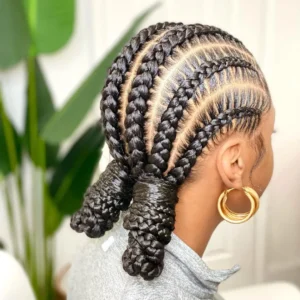
10. Flat Twists
Similar to cornrows but using a two-strand twisting technique instead of a three-strand braid, flat twists lay flat against the scalp and can be styled into a variety of updos or worn as-is.
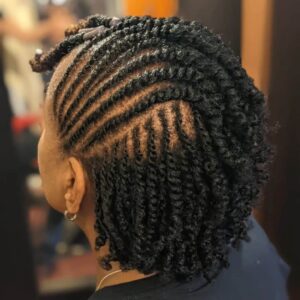
11. Bantu Knots
Small sections of hair are twisted and then wrapped around themselves to create tight, coiled knots against the scalp. Beyond being a protective style on their own, Bantu knots are also a popular heatless curling method when taken down.
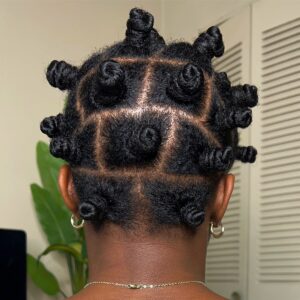
12. Two-Strand Twists
One of the simplest protective styles to do at home, two-strand twists involve twisting two sections of natural hair around each other without any added extensions, making them a great low-cost, beginner-friendly option.
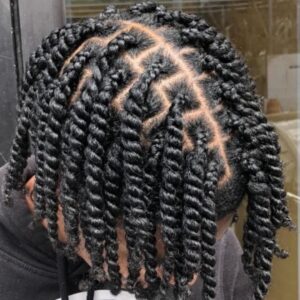
13. Braided Updo
Any of the braided styles above can be gathered into an updo — a bun, ponytail, or pinned style — for an even more protective, tucked-away finish that further minimizes friction and exposure to the elements.
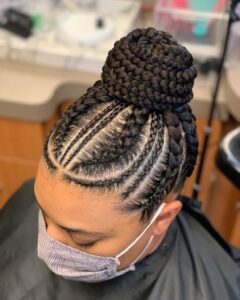
14. Wig Install with a Braided Base
Braiding natural hair into flat cornrows underneath a wig allows for a completely protective style while still offering the versatility to change your look daily by switching wigs, without ever manipulating your natural hair directly.
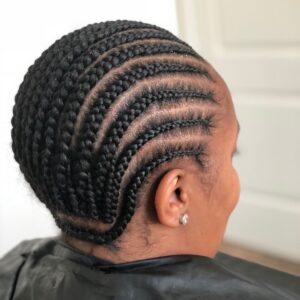
15. Silk Press with a Protective Updo
For those who prefer their natural texture styled straight occasionally, wearing a silk press pulled up into a low, protective bun or updo (rather than left down and exposed) helps extend the style’s life while still offering some protective benefit.
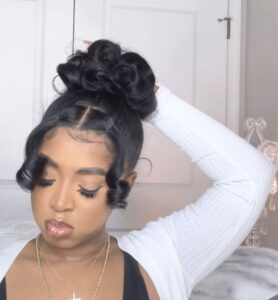
16. Pineapple Updo
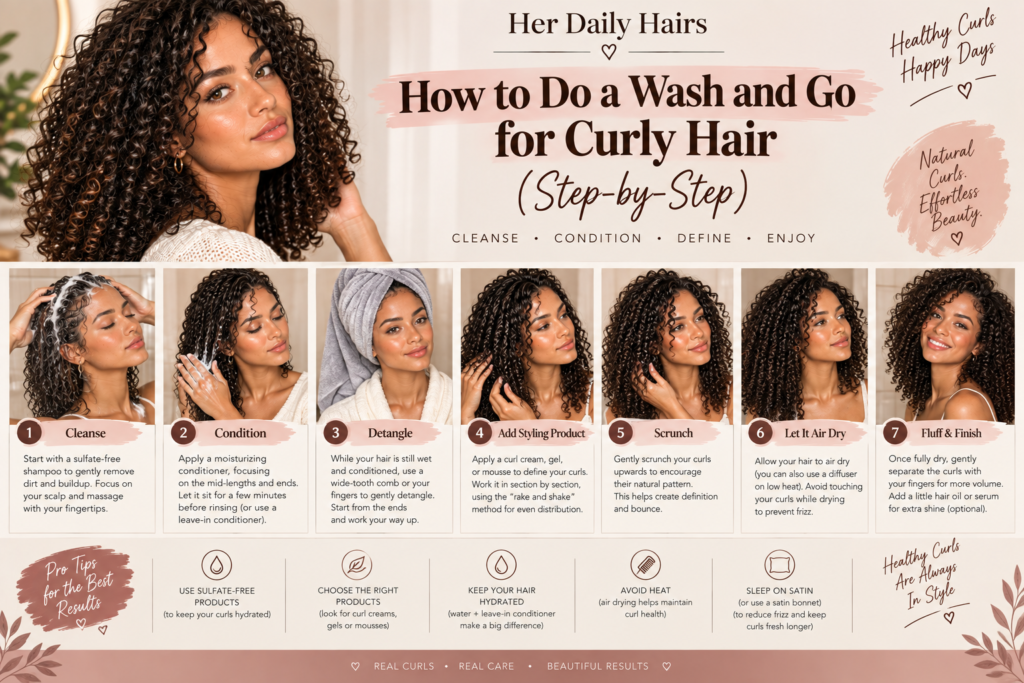
A quick, everyday protective option for curly or coily hair, the pineapple involves gathering curls loosely at the top of the head to preserve curl definition and minimize friction, especially useful overnight or between wash days.
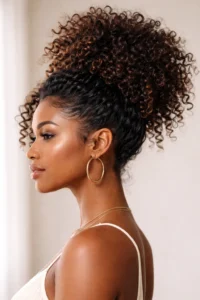
17. Halo Braid
A single large braid wrapped around the head like a crown, tucking the ends securely underneath. This elegant style doubles as both an everyday protective option and a dressier look for special occasions.
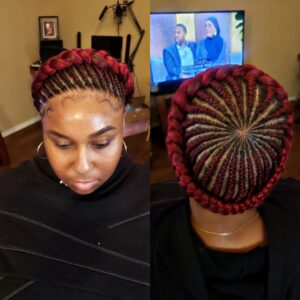
18. Goddess Braids
Thicker, more raised versions of traditional cornrows, goddess braids offer a bold, dimensional look while still functioning as a fully protective style with tucked, secured ends.
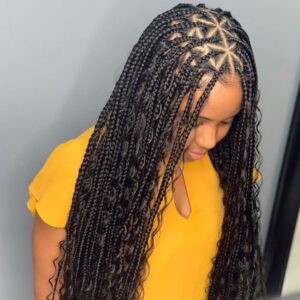
19. Yarn Braids
Using yarn instead of synthetic extension hair, yarn braids offer a lightweight, budget-friendly protective style that can be styled in a variety of thicknesses and lengths.
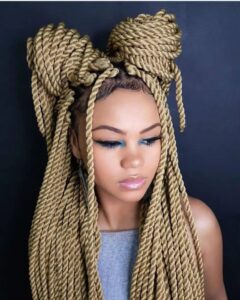
20. Protective Buns and Updos with a Satin Scarf
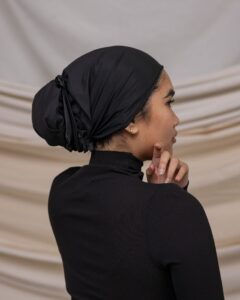
For the simplest possible protective approach, gathering natural hair into a loose bun or twist and securing it under a satin or silk scarf protects against friction from cotton pillowcases and clothing without requiring any braiding or twisting technique at all.
How to Choose the Right Protective Style for You
- Consider your lifestyle. If you’re active or work out frequently, a lower-maintenance style like two-strand twists or a wig install may hold up better than a delicate, intricate braid pattern.
- Think about your timeline. Styles like box braids or Senegalese twists are better suited to longer-term wear (four to eight weeks), while pineapple updos or simple buns work best as short-term, daily protective options.
- Factor in your hairline’s sensitivity. If you’re prone to tension or thinning at the edges, opt for lower-tension styles like knotless braids rather than traditional braiding methods that start tight at the root.
- Budget matters. Styles like two-strand twists or a simple protective bun cost nothing beyond your usual hair products, while braided styles using extensions typically require a salon visit and the cost of the hair itself.
Accessorizing Protective Styles
One of the underrated benefits of protective styling is how easily these looks can be dressed up or down:
- Beads and cuffs on the ends of twists or braids add a personal, decorative touch and are especially popular on children’s protective styles.
- Scarves and head wraps can transform a simple braided or twisted style into a completely different look for special occasions, while also offering extra protection for the hairline.
- Gold or silver hair jewelry threaded through individual braids or locs has become a popular way to elevate a protective style for events without changing the underlying installation.
- Edge control and laid baby hairs at the hairline can give braided or twisted styles a more polished, finished appearance for those who want a sleeker overall look.
How Protective Styles Differ Across Hair Textures
While protective styling is often discussed in the context of coily or kinky natural hair textures, the core principles apply more broadly:
- Type 3 (curly) hair often does especially well with looser protective styles like flat twists, braided updos, or a simple pineapple, since tighter, denser styles aren’t always necessary to achieve the protective benefit.
- Type 4 (coily/kinky) hair tends to benefit most from styles specifically designed to minimize daily manipulation over longer periods, such as box braids, twists, or faux locs, since this hair type is often more prone to breakage from daily combing and styling.
- Transitioning hair (hair growing out from a previous relaxer or color treatment) often benefits from protective styles that minimize the need to manage two different textures at the demarcation line, making twists, braids, or a wig install particularly practical during this stage.
Caring for Your Natural Hair Underneath a Protective Style
- Moisturize your scalp regularly. Even with a protective style installed, your scalp still needs hydration — a lightweight oil or leave-in spray applied directly to the scalp helps maintain moisture balance.
- Don’t leave a style in too long. Even low-manipulation styles can lead to matting, buildup, or breakage if worn well past their recommended timeframe, typically six to eight weeks maximum for most braided or twisted styles.
- Sleep with a satin or silk bonnet or pillowcase. This reduces friction and helps protective styles last longer while also protecting your hairline and edges.
- Cleanse your scalp between full takedowns. A diluted shampoo applied directly to the scalp with an applicator bottle can help remove buildup without fully unraveling your protective style.
Frequently Asked Questions About Protective Hairstyles for Natural Hair
How long should I keep a protective style in? Most protective styles are recommended for four to eight weeks, depending on the style and how well your scalp and hairline are holding up. Styles that create noticeable tension or discomfort should be taken down sooner, regardless of the general timeframe.
Do protective styles actually help hair grow faster? Protective styles don’t speed up the rate of hair growth from the scalp, but they do support length retention by minimizing the breakage that often prevents hair from reaching its full growth potential. In other words, they help you keep the length you’re already growing rather than accelerating growth itself.
Can protective styles cause hair damage? Yes, if installed too tightly or worn for too long without proper scalp care. Tension-related damage, particularly at the hairline, is one of the most common risks associated with protective styling, which is why choosing lower-tension techniques and monitoring how a style feels is important.
What’s the best low manipulation hairstyle for beginners? Two-strand twists are one of the most beginner-friendly protective styles, since they require no added extensions or advanced technique and can be done entirely at home with minimal practice.
How do I know if a protective style is too tight? Persistent tenderness, tension headaches, small bumps along the hairline, or visible thinning are all signs that a style has been installed too tightly and should be adjusted or removed.
Final Thoughts
Protective hairstyles for natural hair offer a genuine, practical path toward healthier, longer hair — not through any special product or treatment, but simply by reducing the daily wear and tear that leads to breakage over time. With 20 different options ranging from a five-minute pineapple updo to a longer-term braided install, there’s a low manipulation hairstyle here to fit almost any lifestyle, budget, and hair goal.
Loved these ideas? Save your favorite protective hairstyles to Pinterest so you have them ready for your next style change.