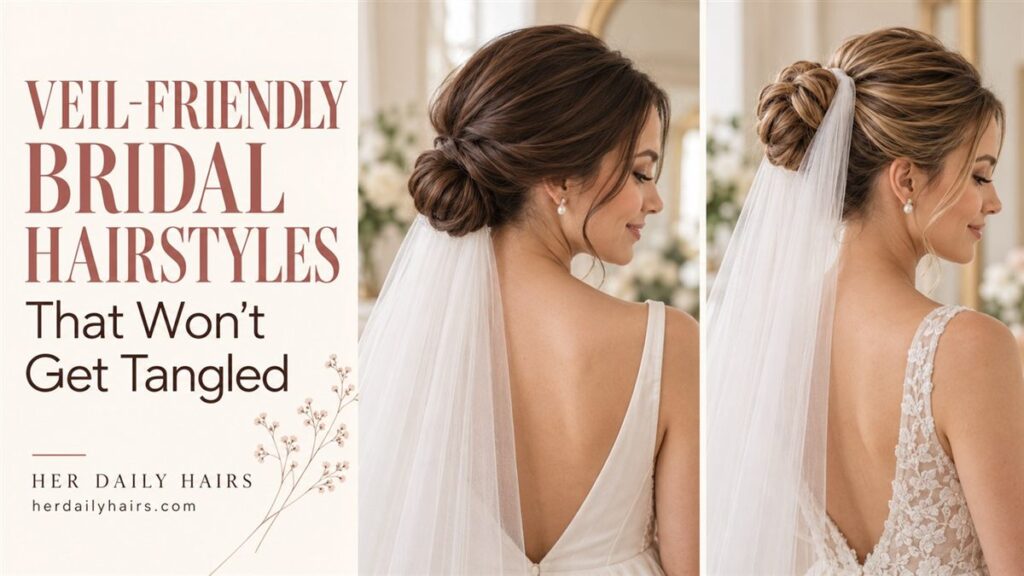
A gorgeous veil can elevate any bridal look, but it comes with a practical challenge many brides don’t think about until it’s too late: not every hairstyle works well with a veil pinned into it. The wrong combination can lead to tangling, slipping, or a veil that pulls uncomfortably throughout the day. These veil friendly hairstyles are specifically chosen for how well they hold a veil securely, without sacrificing how beautiful the overall look feels.
Whether you already know you want a veil or you’re still deciding, this guide walks through the best bridal hairstyles with veil compatibility in mind, organized by veil type, along with tips for securing (and later removing) your veil without a hair disaster.
Why Veil-Friendliness Matters
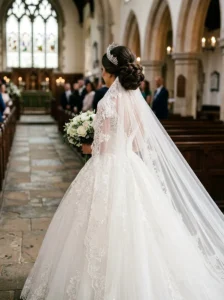
Veils are typically secured with a comb sewn into the fabric, which needs a sturdy anchor point in your hair to stay secure throughout the day. Styles with too much loose, flowing hair can cause the veil to tangle with your actual strands, while overly slick or product-heavy styles can sometimes struggle to hold the comb securely. The right hairstyle gives your stylist a stable base to anchor the veil comfortably, so it stays in place through your ceremony and can be removed smoothly for the reception, if you choose to take it off.
How Veil Type Affects Your Hairstyle Choice
Blusher or Cathedral Veils
Longer, more dramatic veils tend to work best with updos, since the weight and length of the veil need a secure, structured base to anchor into without pulling on loose hair.
Fingertip or Elbow-Length Veils
These medium-length veils offer a bit more flexibility, working well with both updos and half-up styles, depending on your preferred overall look.
Birdcage Veils
Shorter, more structured birdcage veils tend to pair best with sleek, simple styles, since their smaller size doesn’t require as much hair volume to anchor securely.
12 Veil-Friendly Bridal Hairstyles
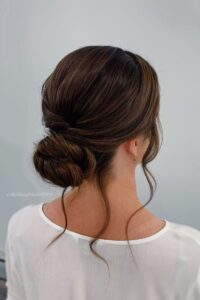
1. Low Chignon
A classic, low updo at the nape of the neck offers one of the most secure anchor points for a veil comb, making it a reliable choice regardless of veil length.
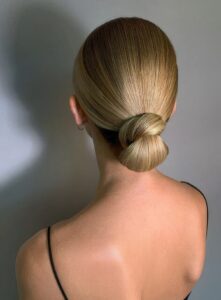
2. Sleek Low Bun
Smooth and structured, a sleek low bun gives a veil comb plenty of secure hair to attach to, while the low placement means the veil can be easily removed later without disturbing the style.
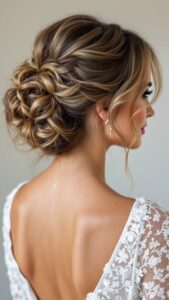
3. Voluminous Updo with Pinned Curls
A fuller updo built from pinned curls offers multiple secure points to anchor a veil comb, making it particularly well-suited to heavier blusher or cathedral veils.
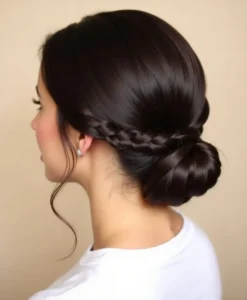
4. Braided Low Bun
Incorporating a braid into a low bun adds textural interest while still providing the sturdy base needed to hold a veil securely throughout the ceremony.
5. Half-Up Style with a Secured Base
For brides who don’t want a full updo, a half-up style with the top section firmly pinned offers a reasonably secure anchor point, best suited to lighter, shorter veils.
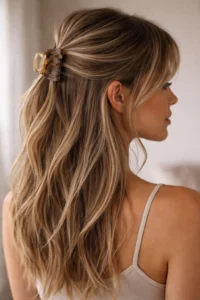
6. Twisted Updo
A style built from twisted sections pinned together creates multiple secure points throughout, offering good veil security along with a softer, more romantic texture than a sleek bun.
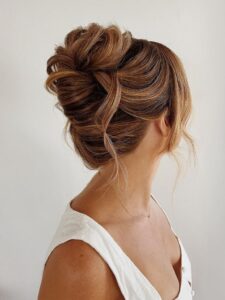
7. Braided Crown with a Low Bun
Combining a braided crown with a low bun at the back offers a decorative, secure base, particularly well-suited to bohemian or outdoor wedding aesthetics.
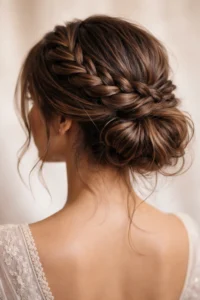
8. Classic French Twist
A timeless, elegant updo, the French twist provides a long, secure pinning area along the back of the head, ideal for anchoring a veil comb without visible gaps.
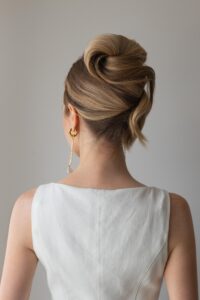
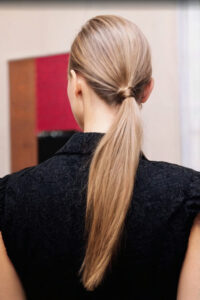
9. Low Ponytail with a Wrapped Base
A sleek, low ponytail with a small section wrapped around the base offers a simpler alternative to a full updo while still providing a stable area to secure a veil.
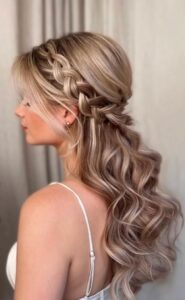
10. Half-Up Braided Style
A half-up style incorporating a braid at the crown offers both decorative interest and a firm pinning area, working particularly well with fingertip-length veils.
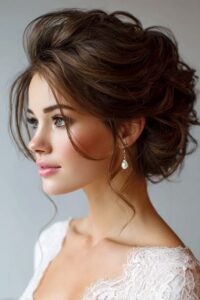
11. Textured Updo with Face-Framing Pieces
A slightly undone, textured updo with soft pieces left loose around the face balances a romantic, bohemian feel with the secure structure a veil needs underneath.
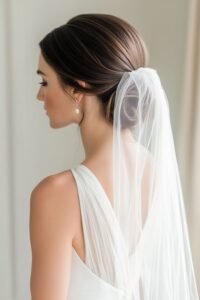
12. Sleek Low Bun for a Birdcage Veil
A simple, polished low bun pairs particularly well with a birdcage veil, since the smaller veil doesn’t require the volume a longer veil would, letting the hairstyle itself take center stage.
Tips for Securing a Veil Without Tangling Your Hair
- Ask your stylist to create a dedicated anchor point. A small, firmly pinned section specifically for the veil comb helps prevent it from pulling on loose strands elsewhere.
- Avoid overly slippery products near the veil’s placement. Heavy serums or oils can make it harder for the comb to grip securely, so your stylist may use a firmer-hold product in that specific area.
- Consider the direction of the veil comb’s teeth. Proper placement, angled correctly with your hair’s natural direction, reduces the risk of snagging or tangling when the veil moves throughout the day.
- Practice putting the veil on and taking it off during your bridal hair trial. This helps you and your stylist identify and fix any tangling issues well before the wedding day itself.
Removing Your Veil for the Reception
Many brides choose to remove their veil after the ceremony or photos, transitioning into a simpler look for the reception. A few tips make this transition smoother:
- Choose a hairstyle that still looks finished without the veil, so the transition feels like a natural part of the day rather than an obvious change.
- Ask your stylist to secure the veil in a way that’s easy to remove, without needing to redo your entire hairstyle in the process.
- Have a trusted bridesmaid or family member help with removal, since reaching the back of your own head to carefully remove pins can be tricky, especially in a wedding dress.
- Bring a small bag or box to store the veil safely once it’s removed, keeping it protected for photos or as a keepsake afterward.
How Hair Type Affects Veil Security
Your natural hair type and texture can influence how well a veil holds, regardless of which style you choose:
- Fine, silky hair can sometimes struggle to hold a veil comb securely, since there’s less natural grip. Backcombing or teasing the anchor section slightly before placing the comb can help significantly.
- Thick or coarse hair generally provides a sturdier base for a veil comb, though your stylist may need to use slightly larger or stronger pins to secure the surrounding style effectively.
- Curly or textured hair often holds a veil comb well due to its natural grip, though the overall style may need some adjustment to ensure the veil sits at the correct angle given the added volume.
- Hair extensions, if you’re using them, should generally be installed well before your bridal hair trial so your stylist can plan the veil’s placement with the extensions already incorporated into your overall style.
Working with Your Stylist on Veil Placement
A few additional details are worth discussing with your stylist beyond the hairstyle itself:
- Veil angle and height. Where exactly the veil sits at the crown affects both how it looks in photos and how securely it stays in place throughout movement and dancing.
- Double veils or veil changes. Some brides opt for a longer veil during the ceremony and a shorter one (or none at all) for the reception, which requires planning for two different anchor points or an easy-removal setup.
- Wind and outdoor conditions. If your ceremony is outdoors, discuss extra securing techniques with your stylist, since wind can put additional strain on the veil’s anchor point.
- Photography considerations. Let your stylist know if there are specific veil-related photos you’re hoping to capture (like a veil blowing in the wind or draped over your shoulders), since this can influence how and where it’s secured.
Frequently Asked Questions About Veil-Friendly Hairstyles
Can I wear my hair down with a veil? It’s possible, particularly with shorter, lighter veils, but hair worn fully down generally provides less secure anchoring than an updo or half-up style, increasing the risk of tangling throughout the day.
Will a veil damage my hairstyle when it’s removed? With proper placement and a secure, well-planned anchor point, removing a veil typically doesn’t significantly disrupt the rest of your hairstyle, especially if your stylist plans for easy removal from the start.
How do I know which veil style will work best with my hair length? Shorter hair generally pairs well with shorter veils and simpler updos, while longer hair offers more flexibility to pair with longer, more dramatic veil styles and more elaborate updos.
Should I bring my veil to my bridal hair trial? Yes — bringing your veil to the trial is one of the most important steps in ensuring the final hairstyle and veil placement work well together, giving you and your stylist a chance to troubleshoot any issues in advance.
Can a birdcage veil work with an updo? Yes, birdcage veils pair well with both sleek updos and simpler styles, since their smaller size doesn’t require as much hair volume or structure as a longer, more dramatic veil would.
What if my hairstylist hasn’t worked with veils before? It’s worth asking directly about their experience during your initial consultation, since veil placement and anchoring is a specific skill that benefits from hands-on bridal experience, and a stylist less familiar with it may need extra guidance or practice during your trial.
Final Thoughts
Choosing a veil-friendly hairstyle doesn’t mean sacrificing on style — many of the most elegant, popular bridal updos also happen to be some of the most secure options for anchoring a veil comfortably. Bringing your veil to your bridal hair trial and discussing placement with your stylist ahead of time helps ensure your hair and veil work together seamlessly throughout your entire wedding day.
Loved these ideas? Save your favorite veil-friendly hairstyles to Pinterest so you have them ready for your own bridal hair trial.
Looking for more wedding hair inspiration? Check out our guides on Bridal Hair Trial: What to Expect and How to Prep and 25 Elegant Updo Hairstyles for Weddings for more ways to plan your perfect wedding-day look.