The butterfly haircut has become one of the most requested layered cuts in recent years, prized for the soft, wing-like movement that gives it its name. Unlike heavier, more uniform layering, this cut is designed to frame the face and add volume right where you want it most — making it a popular choice across a wide range of hair lengths and textures.
Here’s everything to know about the butterfly haircut, including who it suits best and how to style it once you’ve got it.
What Is a Butterfly Haircut?
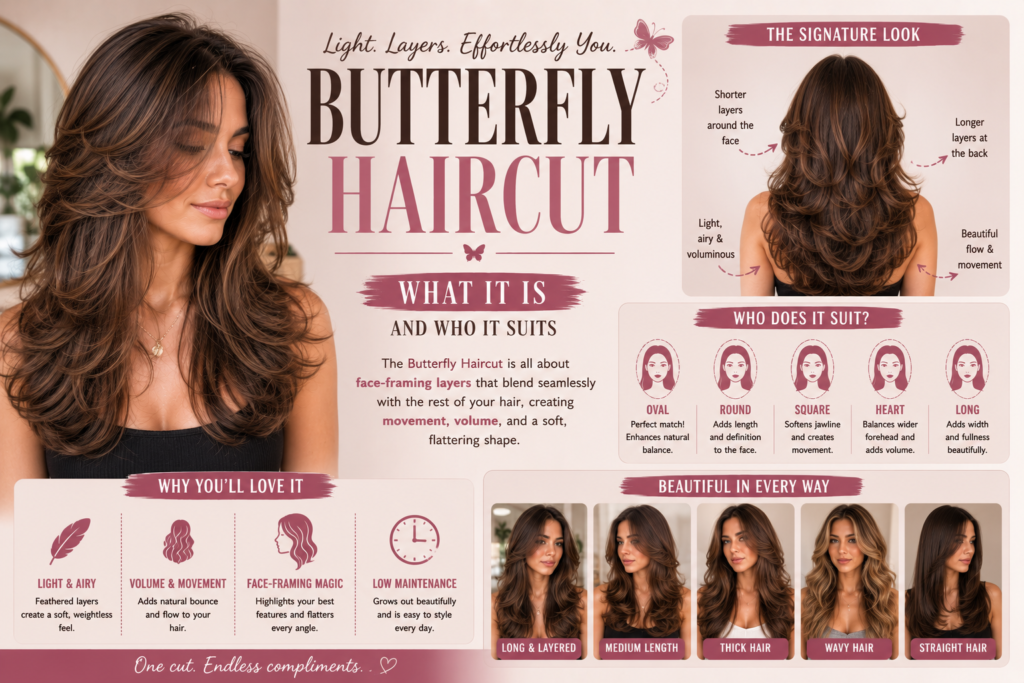
The butterfly haircut is a heavily layered cut characterized by shorter, face-framing layers around the crown and sides that gradually blend into longer length toward the back and ends. The name comes from the way these layers “fan out” and move, resembling butterfly wings when the hair is worn down or slightly tousled.
Unlike a traditional layered cut, which often distributes layers evenly throughout, the butterfly cut concentrates the shortest layers around the face and crown specifically, creating a distinct silhouette with noticeable volume at the top that tapers into softer movement below.
Butterfly Haircut vs Other Layered Cuts
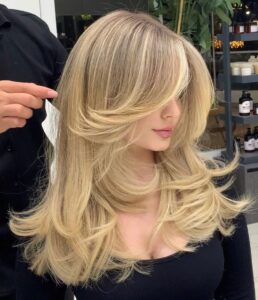
- Butterfly cut vs shag: The shag typically layers more evenly throughout the entire head, while the butterfly cut concentrates layering specifically around the face and crown.
- Butterfly cut vs long layers: Traditional long layers tend to be more subtle and gradual, while the butterfly cut creates a more dramatic, distinct silhouette with shorter framing pieces.
- Butterfly cut vs wolf cut: The wolf cut combines heavy shag layering with a mullet-inspired silhouette, while the butterfly cut keeps a more uniform length at the back with dramatic framing only at the front and crown.
Who the Butterfly Haircut Suits Best
Hair Length
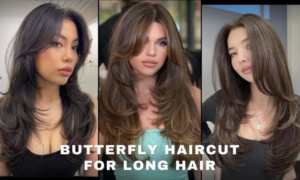
The butterfly cut works especially well on medium to long hair, since there needs to be enough length for the shorter face-framing layers to contrast against the longer pieces underneath. It can be adapted for shorter lengths, but the signature “wing” effect is most visible with at least shoulder-length hair or longer.
Hair Texture
- Straight hair: The layering shows clearly, creating defined movement and shape, though straight hair may need styling (like a round brush blowout) to fully activate the layers’ movement.
- Wavy hair: This texture tends to show off the butterfly cut particularly well, since natural wave pattern enhances the layered movement without much additional styling.
- Curly hair: The cut can work on curly hair, though it requires careful, curl-specific cutting to ensure the shorter layers don’t disrupt curl pattern or create unwanted bulk.
Face Shape
The butterfly cut is considered versatile across face shapes, since the face-framing layers can be customized in length and placement to soften angles (for square or rectangular faces) or add width (for narrower face shapes).
Hair Thickness
- Fine hair: The layering can add the appearance of volume and movement, which is often a welcome benefit for finer hair types.
- Thick hair: The cut helps reduce bulk while adding shape, making it a popular choice for those wanting to lighten a heavy, one-length cut.
How to Style a Butterfly Haircut
- Blow-dry with a round brush for maximum volume. Directing airflow at the roots while curving the ends outward emphasizes the layered “wing” shape.
- Use a curling wand for soft waves. Loosely curling the face-framing layers enhances their movement and highlights the cut’s signature silhouette.
- Apply a lightweight texturizing spray. This helps separate the layers and adds definition, especially useful for straight hair types.
- Try a middle or slightly off-center part. Both tend to showcase the face-framing layers effectively, though a deep side part can also work for a more dramatic look.
Maintaining a Butterfly Haircut
- Get regular trims. Since the cut relies on precise, strategic layering, regular trims (every 8-10 weeks) help maintain its shape as hair grows out.
- Communicate clearly with your stylist about layer length. Butterfly cuts can vary significantly based on how short the face-framing layers are cut — bring reference photos to ensure you get the version you want.
- Use a lightweight conditioner. Since the cut is designed to show movement and texture, overly heavy conditioners can weigh down the layered effect.
Final Thoughts
The butterfly haircut remains popular because it offers a distinct, dynamic alternative to more traditional layering — adding noticeable volume and movement specifically where it’s most flattering. Whether you have straight, wavy, or curly hair, and whether your hair runs fine or thick, there’s likely a version of this cut that can be tailored to suit you. Bring butterfly haircut ideas and reference photos to your next salon visit to discuss the right layer placement and length for your hair.
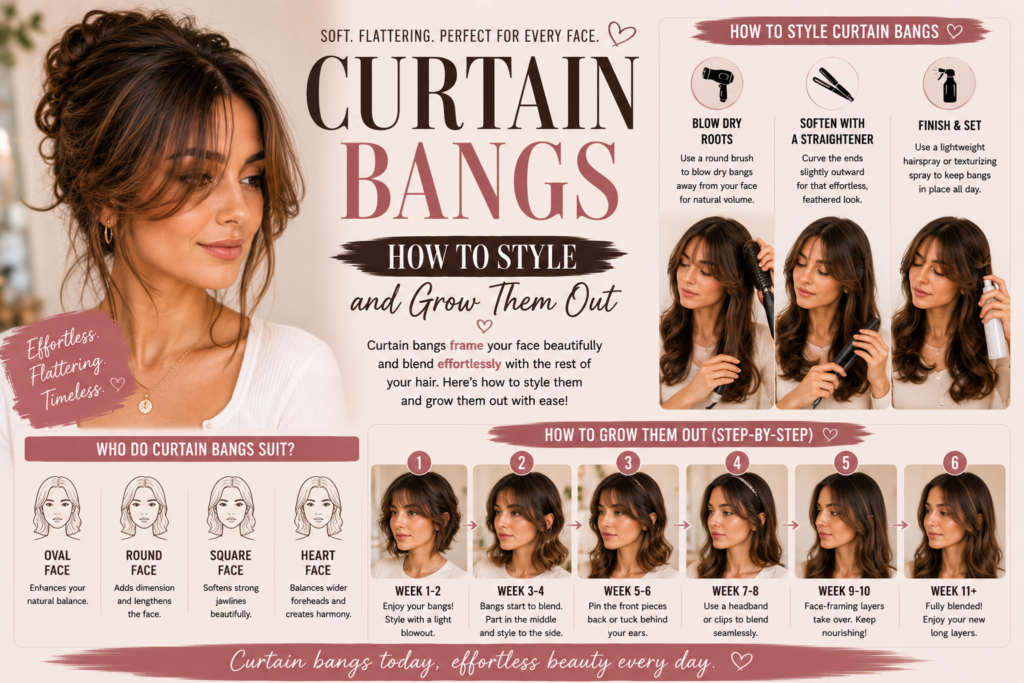
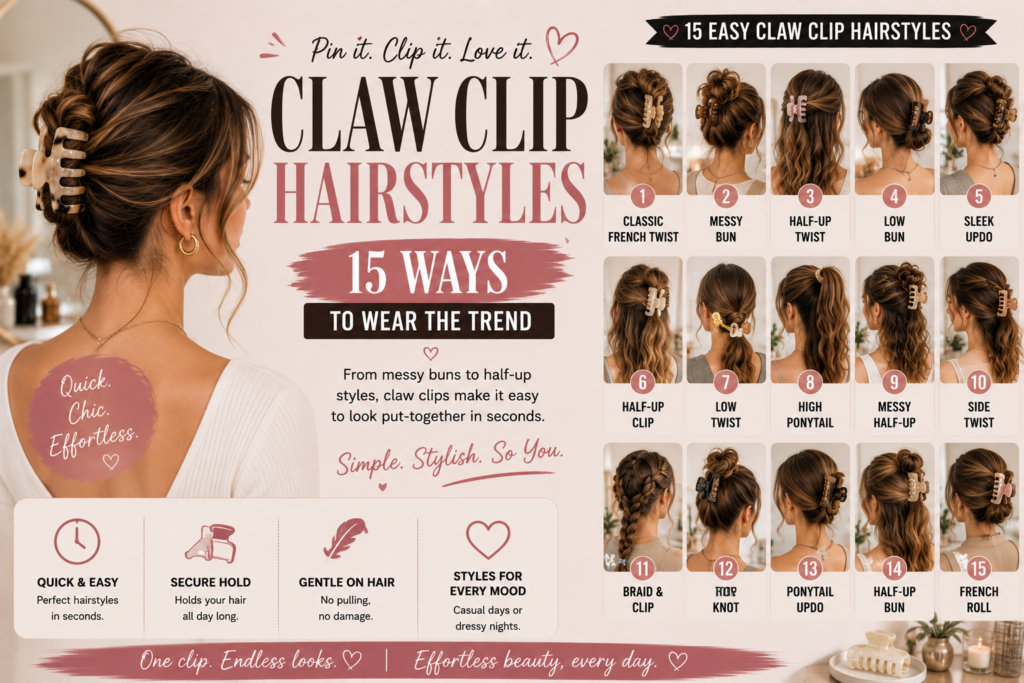
Looking for more trending haircut guides? Check out our upcoming guides on curtain bangs and claw clip hairstyles for more current trends.