Curtain bangs have held their place as one of the most requested fringe styles for good reason — they’re soft, face-framing, and far more versatile than a traditional blunt fringe. They also happen to be one of the easier bang styles to grow out gracefully, which makes them a popular low-commitment way to try bangs for the first time.
This guide covers how to style curtain bangs at every length, along with practical tips for the in-between stages as they grow out.
What Are Curtain Bangs?
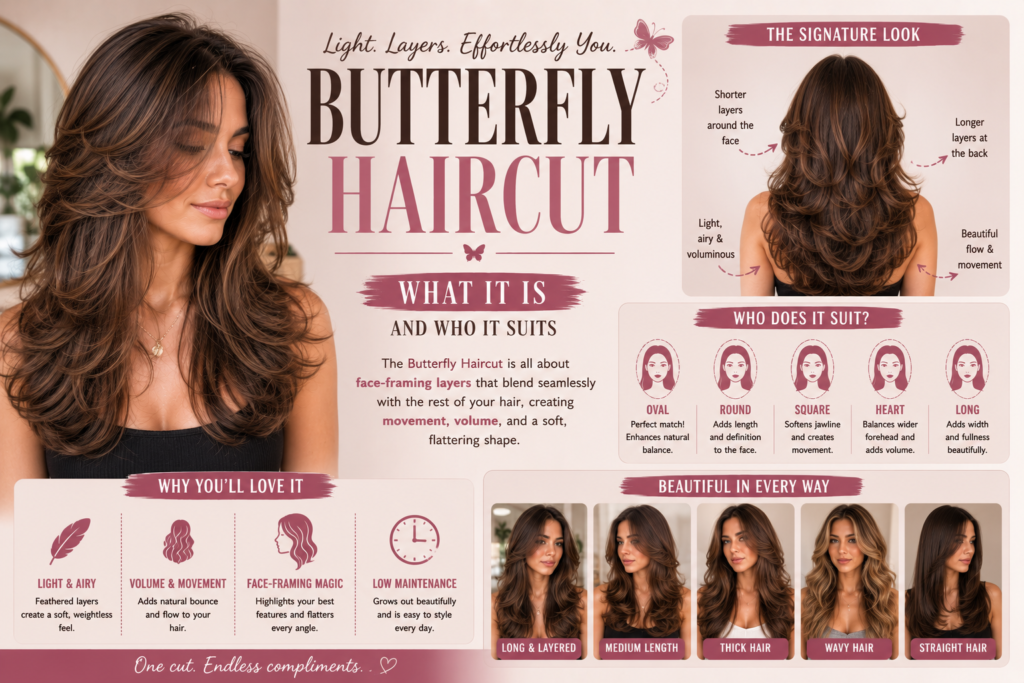
Curtain bangs are a fringe style parted down the middle and swept to either side, framing the face rather than sitting straight across the forehead. Unlike a blunt, full fringe, curtain bangs blend more seamlessly into the rest of the haircut, which is part of why they suit such a wide range of face shapes and hair textures.
Why Curtain Bangs Remain So Popular
- They’re versatile. Curtain bangs work with straight, wavy, and curly hair, and can be styled sleek or textured depending on the look you’re going for.
- They suit most face shapes. Because they frame rather than fully cover the forehead, curtain bangs tend to be flattering across round, square, oval, and heart-shaped faces alike.
- They grow out more gracefully than blunt bangs. Since they’re already designed to sweep to the sides, curtain bangs blend into the rest of your hair more easily as they grow, without an awkward in-between stage.
How to Style Curtain Bangs
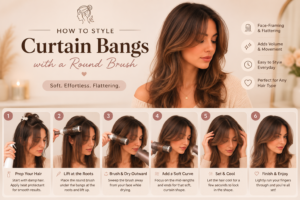
With a Round Brush
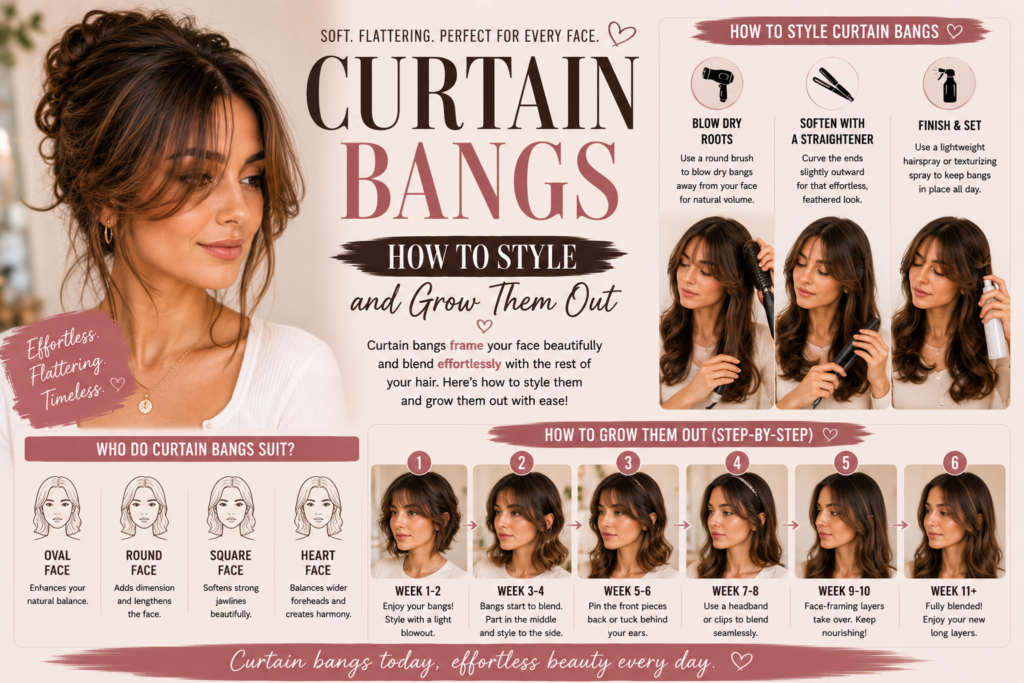
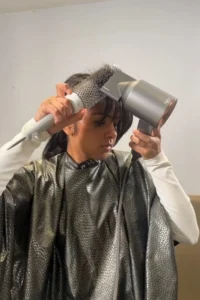
Blow-drying curtain bangs with a round brush, curving them outward and away from the face, is the most common method for achieving that soft, swept look. Start with damp bangs, section them from the rest of your hair, and dry while pulling the brush down and out in the direction you want them to fall.
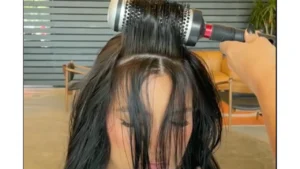
With a Curling Iron or Wand
For those without a round brush or blow dryer skills, a small-barrel curling iron can achieve a similar effect. Curl each side of the bangs away from the face, holding for just a few seconds since bangs are typically finer and more prone to heat damage.
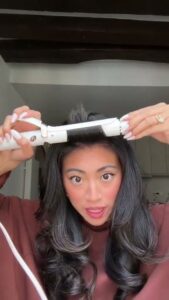
With a Flat Iron
A flat iron can also create the soft curtain shape by bending the iron slightly outward as you pull it through each section, essentially “curling” the ends using a flat iron instead of a round one.
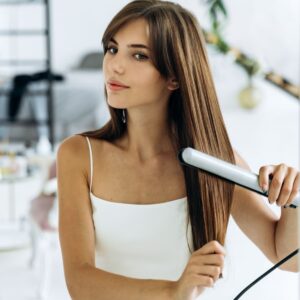
Air-Drying Curtain Bangs
For low-maintenance styling, applying a lightweight mousse or curl cream to damp bangs and simply parting them down the middle can create a natural, soft curtain effect without any heat.
Curtain Bangs by Hair Length
- Short hair (bob or pixie length): Curtain bangs on shorter cuts tend to be shorter overall, framing the face more tightly and blending quickly into the rest of the cut.
- Medium-length hair: This is one of the most common lengths for curtain bangs, offering enough length to sweep and style in multiple ways.
- Long hair: Longer curtain bangs can be styled more dramatically, with more length to curl, wave, or sweep further back if desired.
Growing Out Curtain Bangs
One of the biggest advantages of curtain bangs is how manageable the grow-out process tends to be, since they’re already designed to blend into the rest of your hair.
- Use bobby pins or clips during the awkward stages. Pinning bangs back or to the side can help manage length as they grow past your typical styling point.
- Get periodic “dusting” trims. Even if you’re growing them out, a very light trim every few weeks helps keep the ends looking healthy without significantly slowing growth.
- Incorporate face-framing layers. As bangs grow, asking your stylist to blend them into face-framing layers throughout the rest of your hair helps disguise the transition.
- Try heatless waves during the transition. Adding texture to the growing-out sections can help disguise any awkward, uneven lengths as they blend in.
- Be patient with the ear-length stage. Many people find bangs growing past the chin but not yet full length to be the trickiest stage — texturizing spray and a bit of styling patience go a long way here.
Common Curtain Bangs Mistakes to Avoid
- Cutting them too short initially. Curtain bangs are easier to trim shorter later than to fix if cut too short from the start — ask your stylist to err on the longer side for your first cut.
- Skipping heat protectant. Bangs are typically styled more frequently than the rest of your hair, making heat protectant especially important to prevent damage.
- Not accounting for natural texture. Wavy or curly hair may need different sectioning or product than straight hair to achieve the classic curtain bang shape.
Final Thoughts
Curtain bangs remain a popular choice because they offer the face-framing benefit of bangs without the higher maintenance and more dramatic commitment of a full, blunt fringe. Whether you’re just getting them cut for the first time or navigating the grow-out process, this guide on how to style curtain bangs should help you get the most out of this versatile, face-framing style.
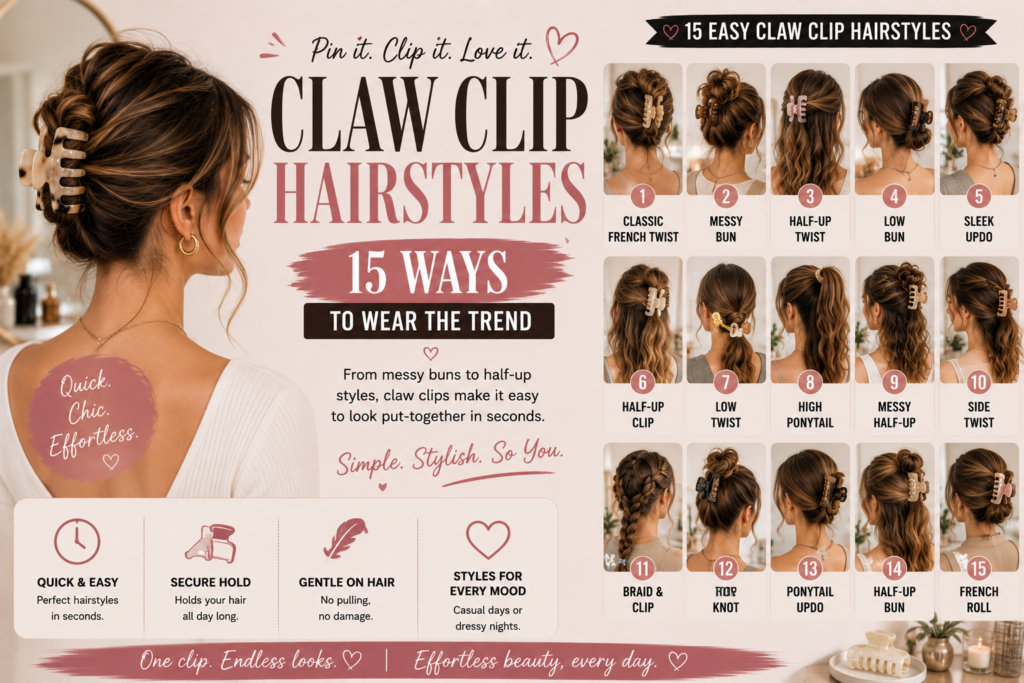
Looking for more trending haircut guides? Check out our guide on Butterfly Haircut: The Full Guide and our upcoming claw clip hairstyles guide for more current trends.