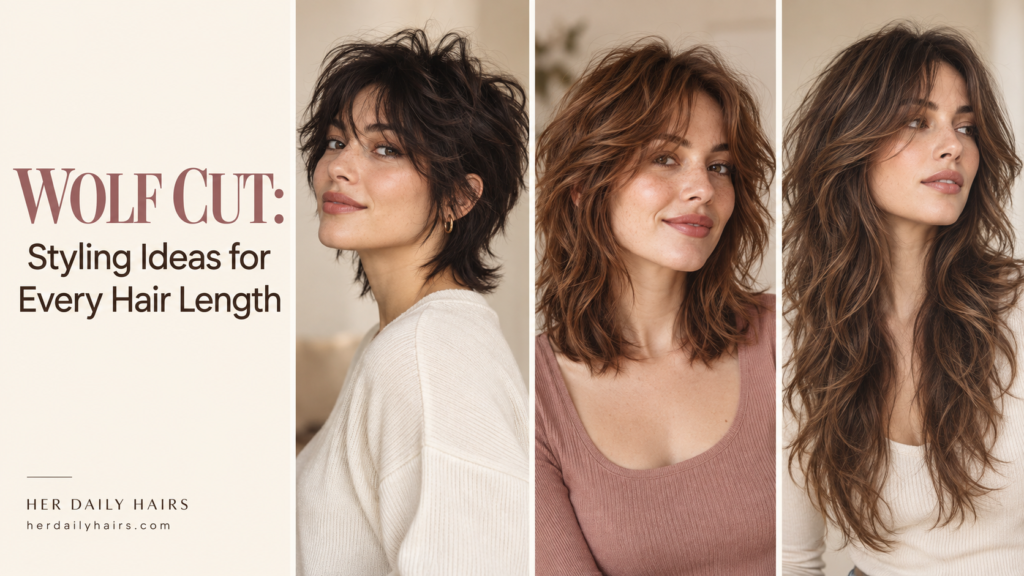
Few haircuts have had the staying power of the wolf cut hairstyle. Combining the choppy, textured layers of a shag with the shorter, face-framing volume reminiscent of a mullet, the wolf cut has remained one of the most consistently searched hair trends year after year — and part of what makes it so enduring is just how adaptable it is across nearly every hair length.
Below, we’re rounding up wolf cut ideas specifically tailored to long, medium, and short hair, so you can see exactly how this trend translates regardless of your current length.
What Is a Wolf Cut?
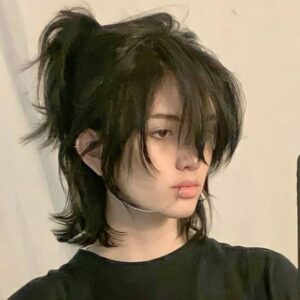
A wolf cut is a heavily layered haircut that combines choppy, piece-y texture throughout with noticeable volume at the crown, often paired with curtain bangs or a fuller fringe. It draws inspiration from both the shag and the mullet, resulting in a shape that’s textured and voluminous on top while maintaining movement and shape throughout the rest of the length.

Why the Wolf Cut Works Across Every Length
Unlike some haircuts that depend heavily on a specific length to achieve their signature look, the wolf cut’s defining features — heavy layering, crown volume, and choppy texture — can be scaled up or down. This flexibility is a big part of why the style has remained relevant across multiple trend cycles rather than fading after a single season.
Wolf Cut Ideas for Long Hair
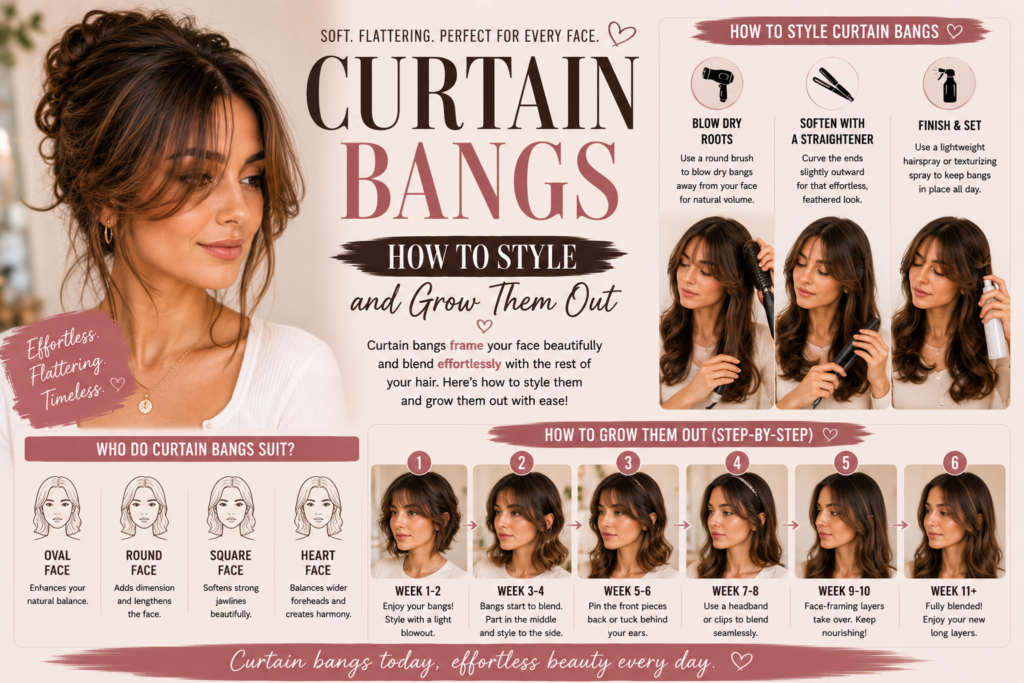
1. Long Wolf Cut with Curtain Bangs
Long hair with heavy face-framing layers and soft curtain bangs is one of the most popular versions of this cut, offering dramatic movement without sacrificing overall length.

2. Long Wolf Cut with Money Piece Highlights
Pairing the cut with bright, face-framing highlights enhances the dimension already built into the heavy layering, drawing extra attention to the movement around the face.
3. Long Wolf Cut with Voluminous Waves
Adding loose waves throughout long, layered hair maximizes the textured, “shaggy” quality that defines this cut, especially when the ends are curled outward for extra volume.
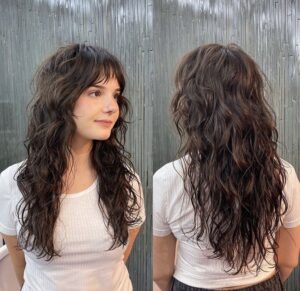
4. Long Wolf Cut with a Middle Part
A precise middle part paired with heavy layering creates a slightly more polished, editorial take on the trend while still maintaining its signature texture.
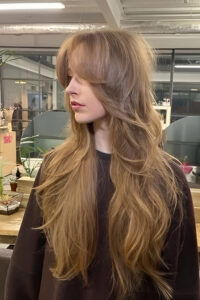
5. Long Wolf Cut, Slicked Back
For a bolder, more dramatic look, slicking back the top section while leaving the layered ends loose creates striking contrast between sleek and textured elements.
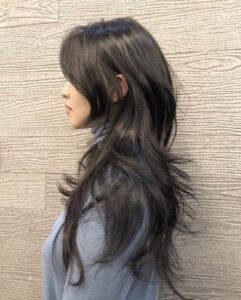
Wolf Cut Ideas for Medium-Length Hair
6. Shoulder-Length Wolf Cut with Bangs
This is one of the most requested versions of the cut, offering enough length to show off the layering while still keeping things manageable day-to-day.
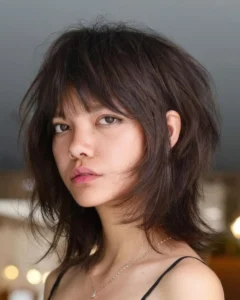
7. Medium Wolf Cut with Curly Texture
Natural curls enhance the wolf cut’s built-in volume and movement, making medium-length curly hair a particularly strong match for this style.

8. Medium Wolf Cut with a Deep Side Part
Switching to a deep side part adds asymmetry to the cut, giving it a slightly softer, more face-framing quality than a center part.
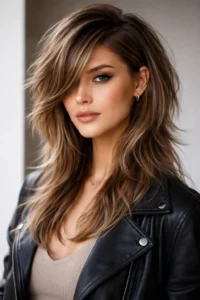
9. Medium Wolf Cut with Balayage
Dimensional color placed throughout the layers enhances the visual texture of the cut, making the movement even more noticeable as hair catches the light.

10. Medium Wolf Cut, Blown Out with Volume
A round-brush blowout focused on lifting the crown and flipping the ends outward maximizes the voluminous, shaggy silhouette this cut is known for.

Wolf Cut Ideas for Short Hair
11. Short Wolf Cut (Pixie-Length)
A shorter take on the trend concentrates heavy layering and texture into a compact, pixie-adjacent shape, offering all the movement of a wolf cut with significantly less length.
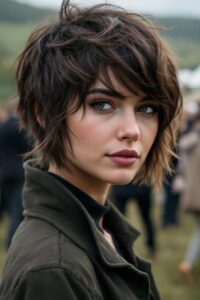
12. Short Wolf Cut with Bangs
Adding a fuller fringe to a short wolf cut enhances the face-framing quality of the style, even without the length longer versions rely on.
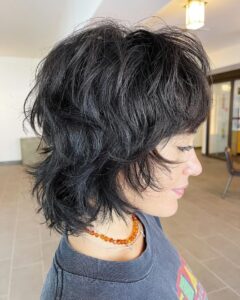
13. Short Wolf Cut with Textured Spikes
Styling the shorter layers with a texturizing product for a slightly spiked, piece-y finish leans into the edgier side of this trend.
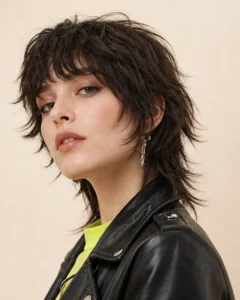
14. Short Wolf Cut, Curly
Curl pattern amplifies the volume naturally built into this cut, making it a particularly strong option for those with shorter, naturally curly hair.

15. Short Wolf Cut with an Undercut
Adding a subtle undercut beneath the layered top section creates additional contrast and edge, giving the style an even bolder, more dramatic finish.
Wolf Cut vs. Other Trending Layered Cuts
Since so many layered haircut trends share overlapping features, it helps to know how the wolf cut stands apart:
- Vs. the shag: Both rely on heavy layering and texture, but the wolf cut typically emphasizes more dramatic crown volume and a slightly more concentrated, mullet-inspired shape at the top, while a shag distributes its choppiness more evenly.
- Vs. the jellyfish cut: The jellyfish haircut creates a dramatic contrast between one long, mostly untouched layer and one significantly shorter under-layer, while the wolf cut blends heavy layering more gradually throughout the entire head rather than isolating it into two distinct sections.
- Vs. the mullet: A true mullet keeps the front and sides notably shorter than the back, creating a stark length contrast, while the wolf cut incorporates layering more evenly throughout, with less of that dramatic short-to-long distinction.
Understanding these differences can help you communicate more precisely with your stylist if you’re trying to land on the exact trend you have in mind.
Hair Color Pairings That Enhance a Wolf Cut
Because the wolf cut relies so heavily on visible texture and movement, certain color techniques can enhance the effect even further:
- Balayage or babylights add dimension that catches the light differently across each layer, making the cut’s texture even more visually apparent.
- A money piece or face-framing highlights draw extra attention to the front layers, particularly effective when paired with curtain bangs.
- A shadow root with lighter ends emphasizes the length variation built into the cut, adding another layer of visual depth beyond the haircut alone.
- All-over vivid or fashion colors (like copper or burgundy) can make the choppy layering read even more dramatically, since the color shift is visible at every layer transition.
Styling Tips for Any Wolf Cut Length
- Use a texturizing spray or paste to enhance the choppy, piece-y quality that defines this cut, regardless of length.
- Focus volume at the crown. A root-lifting spray or a quick backcombing session before finishing your style helps maintain the signature lift this cut relies on.
- Curl the ends outward, not under. This small detail enhances the flipped, voluminous silhouette associated with the wolf cut across all lengths.
- Don’t skip a good blow-dry. Air-drying can sometimes flatten the layers; a proper blowout with a round brush helps activate the shape built into the cut.
Which Face Shapes Suit a Wolf Cut Best?
While the wolf cut’s heavy layering and crown volume make it a fairly adaptable style, a few face-shape considerations are worth keeping in mind:
- Round and square faces often benefit from the height and layering this cut naturally provides, since crown volume helps elongate the overall face shape.
- Oval faces can wear nearly any version of this cut without much adjustment, given their naturally balanced proportions.
- Heart-shaped faces may want to discuss keeping slightly more length and fullness near the jaw when getting this cut, since the style’s face-framing pieces can be customized to add balance rather than concentrating all the volume up top.
As with most trending cuts, these are general starting points rather than strict rules — a skilled stylist can adapt the wolf cut’s layering placement to suit nearly any face shape.
Maintaining a Wolf Cut
Because this cut relies on precise, heavy layering, regular trims every 6-8 weeks help maintain its shape and prevent the layers from growing out into a less defined, blended look. Talk to your stylist about how much length you’re comfortable losing at each appointment to maintain the cut’s signature texture over time.
Frequently Asked Questions About the Wolf Cut
Is a wolf cut the same as a shag? They’re closely related, but a wolf cut typically incorporates more dramatic crown volume and a slightly more mullet-inspired shape, while a traditional shag distributes layers a bit more evenly throughout.
Does the wolf cut work on curly hair? Yes — curly hair is particularly well-suited to this cut, since natural curl pattern enhances the volume and texture the style is built around.
How much length do I lose getting a wolf cut? This depends heavily on your starting length and how dramatic you want the layering to be, but most versions preserve overall length while adding heavy layering throughout, rather than requiring a significant length cut.
Can I try a wolf cut without committing to bangs? Yes — while curtain bangs are a popular pairing, the wolf cut’s core features (heavy layering and crown volume) can be achieved without any fringe at all.
How is a wolf cut different from a mullet? A mullet is characterized by short hair on top and significantly longer length in the back, creating a dramatic length contrast, while a wolf cut incorporates heavy layering more evenly throughout the head, with less of the dramatic short-to-long distinction.
Is the wolf cut a good choice for fine, thin hair? Yes — the heavy layering built into this cut can actually enhance the appearance of volume and movement for finer hair types, making it a popular recommendation for anyone looking to add the illusion of thickness without extensions or other volumizing treatments.
Can I grow out a wolf cut easily if I decide I don’t like it? Growing out heavy layering does require some patience, since the shorter layers need time to catch up with the rest of your length. Regular trims to blend the layers as they grow, rather than skipping haircuts entirely during the transition, generally makes the growing-out process smoother and less awkward-looking.
Final Thoughts
The wolf cut’s staying power comes down to its adaptability — whether your hair is long, medium, or short, the same core principles of heavy layering, crown volume, and textured movement can be tailored to work beautifully at any length. Whichever version you choose, this trend continues to prove why it’s remained a go-to request at salons well beyond its initial viral moment.
Loved these ideas? Save your favorite wolf cut styles to Pinterest so you have them ready for your next haircut appointment.
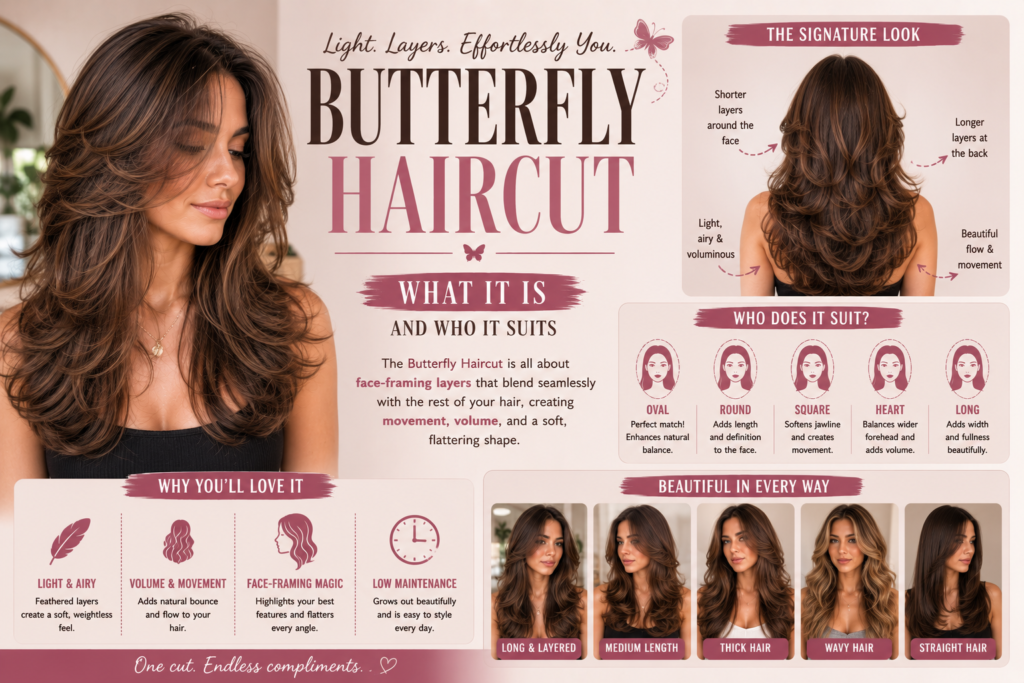
Looking for more trending cuts? Check out our guides on Jellyfish Haircut: What It Is and Who It Suits and Butterfly Haircut: What It Is and Who It Suits for more of this year’s most talked-about layered cuts.